Showing posts with label Fall Critters at the Lake of the Ozarks. Show all posts

Friday, October 16, 2020

5 Creepy Critters Crawling Around Your Home this Fall

Fall at the Lake of the Ozarks is in full swing and we couldn’t be more excited for cooler weather and beautiful fall foliage. However, many people often have the misconception that with cooler weather comes less pests and a declining need for pest control services. That actually couldn't be further from the truth. Pest control is just as important in the fall as it is any other time of the year. Check out 5 creepy critters you might find crawling around your home this fall.


1. Mice
Mice and other rodents may try to begin entering your home looking for a warm shelter with food and water through any small crack or hole. Access points can be anything from a pipe or vent to a broken seal around a window or door. They can chew through insulation and other easy access points. Inspect your home for any place you think a mouse could get through. Ensure all window and door frames, as well as utility pipes that lead to the outside, are sealed tightly. If you have screens on your windows or doors, make sure they're in tact and repair them if necessary.


2. Termites
Termites are another common pest we see making their way into homes in the fall months. While they primarily forage underground for cellulose, they can find their way into wood cords in an attempt to feed so they can return it to the colony to feed others. It's during these excursions that termites can unknowingly enter your home, possibly leaving a trail of pheromones for the colony to follow. And since many homes are insulated with cellulose (their primary source of nutrients), your home just became a welcoming humble abode for the colony!


3. Snakes
If you have birds in your yard or rodents in your house, you may be attracting snakes onto your property. Although you may not control the birds, you can control the rodent problem. Calling a professional pest control company at the Lake of the Ozarks can help you get rid of the rodents hiding in your walls. Unfortunately, snakes like similar conditions as human. During the summer, they like cool places and during the winter, they like warmer places to hibernate, which is why they may seek your home for shelter. During the fall, you may see more snakes than usual, as they are more active due to the nice weather and they are preparing for hibernation.


4. Bed Bugs
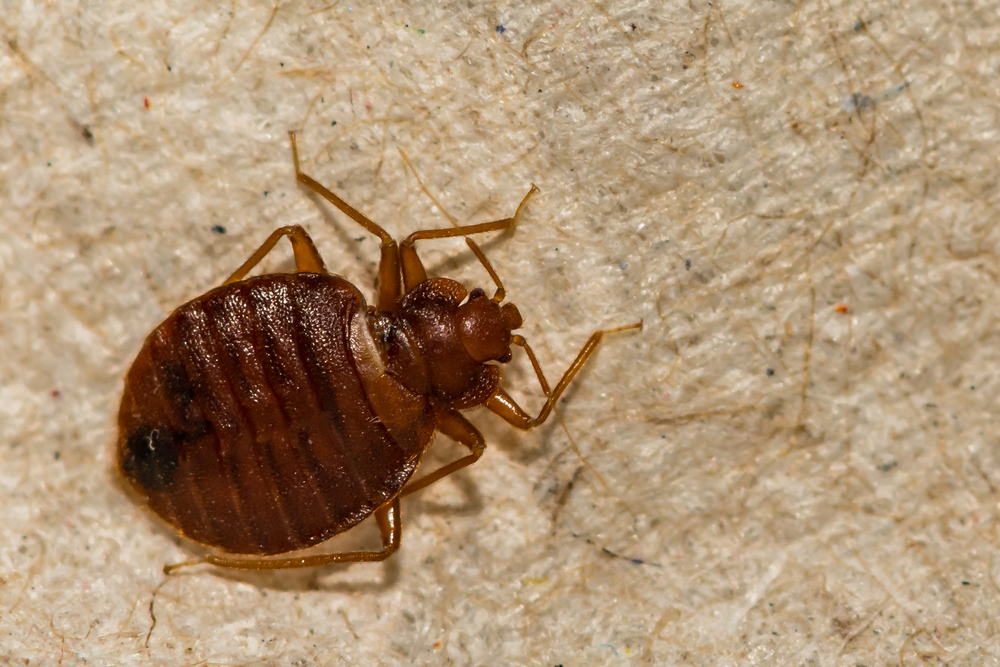
With school back in session and people traveling for the upcoming holidays, it's prime time for bed bugs to migrate. Since they are so resilient and can dwell almost anywhere without a host for so long, they'll find refuge in carpeting, behind light switch and plugin coverings, and floor boards. For bed bugs you'll need to strip off bedding from mattresses as these may contain bugs. Your clothes may possibly be infested with bugs, so you also need to wash these with water at a very high temperature and let them dry in high heat. A professional pest control company at the Lake of the Ozarks should be contacted to treat for bed bugs as they are extremely difficult pests to get rid of and can survive for up to a year without feeding. These pests require chemical treatment as well as high heat treatment, and may require multiple treatments to eradicate the infestation. 

5. Cockroaches
While some pests and rodents migrate to warmer climates for the winter months, others may seek places to hide out from the cold or hibernate. Cockroaches are one of those iffy pests that can go either way. The winter months do pose a risk to cockroaches, which will often die when exposed to temperatures less than 15 degrees Fahrenheit. However, cockroaches can find plenty of ways to avoid that exposure and survive the cold months. Because of their unrelenting ability to survive even the harshest conditions, regular pest control treatments during the colder months are essential for controlling cockroaches.


Get Rid of Creepy Critters with A B Pest Control & Insulation!
There are many pests that will go into hibernation within the next few weeks, but several will simply try to seek shelter in the warmth of your home. If you need pest control services this fall or winter, call A B Pest Control & Insulation at 573-964-1100. We can help you keep your home pest free all year round!

LAKE OF THE OZARKS
PEST CONTROL COMPANY


Visit Our Website:
www.abpest.net

Like us on 
Facebook
Follow us on Twitter
Follow us on LinkedIn

Wednesday, September 19, 2018

What's the Deal with Woolly Bear Caterpillars?

It's that time of year when you're likely seeing those super fuzzy black and brown caterpillars roaming around everywhere. Woolly bears are easily found in the fall months seeking out shelter to hibernate in or under. If you look outside under lawn furniture, leaves, logs and rocks, your sure to find one, but since these little fellows are actively seeking safety for the winter months, you're just as likely to see them crossing the road or crawling along a sidewalk. This week, A B Pest Control & Insulation thought it'd be fun to share with you some information about the woolly bear caterpillar!


What's a Woolly Bear?
The banded woolly bear is the larval form of Pyrrharctia isabella, the Isabella tiger moth. This medium-size moth, with yellowish-orange and cream-colored wings spotted with black, is common from northern Mexico throughout the United States and across the southern third of Canada.

Woolly bears, like other caterpillars, hatch during warm weather from eggs laid by a female moth. Mature woolly bears search for overwintering sites under bark or inside cavities of rocks or logs. That’s why you see so many of them crossing roads and sidewalks in the fall. When spring arrives, woolly bears spin fuzzy cocoons and transform inside them into full-grown moths. The adult moth isn't very attractive when compared to other species. It has golden-brown wings. They also have faint darker brown lines on their wings and the females have a pinkish-orange hind wing.

Will They Damage the Lawn?
The nice thing is that the caterpillar isn't a crop pest and mostly feeds on common deciduous forest trees such as elm, ash, low growing herbs, and other forest plants. They are particularly fond of narrow leafed plantation which is a common garden weed that is found in lawns. This particular caterpillar is not known to feed extensively on ornamental landscape plants or vegetables. The caterpillars rarely cause concern in gardens and lawns because the damage they do occurs so late in the growing season.

Can Woolly Bears Really Predict the Winter? 
The Old Farmer's Almanac shares legend that the woolly bear caterpillars can predict what type of winter we'll have! According to folklore, the Woolly Bear caterpillar has 13 distinct segments of either rusty brown or black. The wider the rusty brown sections (or the more brown segments there are), the milder the coming winter will be. The more black there is, the more severe the winter.

More recent studies state there could be a link between winter severity and the brown band of a woolly bear caterpillar. Evidence suggests that the number of brown hairs has to do with the age of the caterpillar. In other words, how late it got going in the spring. So, going off of this theory, the band likely does say something about a heavy winter or an early spring... from the the previous year.

What do you think? Is the folklore accurate? Do the woolly bears you've seen tell a story reflecting last year's winter or do you think it's an indication of this coming winter? While these fuzzy little creatures are not cause for concern if you find them around your home, it's best to leave them where you find them so they can go about their business of finding a safe place to hibernate for the winter. 
At A B Pest Control & Insulation, we appreciate all things pest related. And, of course, we are firm believers in the more you know, the better prepared you can be! As previously stated, woolly bears are not a pest to be concerned about. But if you do find unwanted pests lurking around your home this fall, be sure to give us a call! We'll help get rid of any pest problems you may have inside and outside!

Lake of the Ozarks
Pest Control Company


Visit Our Website:
www.abpest.net

Like us on 
Facebook
Follow us on Twitter
Follow us on LinkedIn

Follow us on Google+ 


Thursday, October 20, 2016

5 Critters We See At The Lake In The Autumn

The autumn season doesn't just bring in the insects, it also brings in unwanted critters that are seeking shelter from the cold weather. Luckily, a professional animal trapper at the Lake of the Ozarks can protect your home from these unwanted pests. From raccoons to rodents, the Lake area is home to many different creatures that could potentially damage your home if they come inside. A B Pest Control & Insulation lists five critters we see often at the Lake of the Ozarks.


1. Raccoons 


Raccoons, like rodents, can cause a lot of damage to homes while they seek shelter for the winter months. They are known for chewing up electrical wires and can chew through home insulation. However, they can also damage air ducts, cooling systems, vents, fans and wood beams. Raccoons are large animals and in some cases have fallen through the ceilings of some homes. If they stay in your home a long time, they can also flatten the insulation in your home, lowering the R-value. In addition, when raccoons decide to make themselves at home in your attic, they will urinate and defecate, which is not only unsanitary and smells bad, but also contain numerous diseases. 

2. Rodents


Mice and rats like to seek shelter during the cool season. However, it is important to evict them early, as a couple mice can become a dozen in a short amount of time. Rodents can cause a lot of damage to your home as well. They can chew through insulation, electrical wire and wood structures. Mice can fit into a hole the size of a dime, while rats can fit into crevasses the size of a quarter. Rodents are filthy creatures and can leave feces all throughout your home, which is filled with disease.  

3. Snakes


Although snakes do not do any physical damage to our homes, it is certainly unsettling seeing them on the wrong side of the door. Snakes enter homes through open doors and windows, as well as through holes and crevasses. Snakes that come inside are usually small, so it doesn't take a big opening for them to make their way into your home. As the days get colder, snakes will seek warmth to hibernate during the winter months.

4. Squirrels 


Attics are the perfect place for squirrels to nest and have babies. When squirrels nest in attics, they can cause damage to insulation, electrical wires and wood structures. In addition, as squirrels have babies, they will create more and more entry points. This means that they will cause extensive damage to the outside of your home. They will chew through the structure to make an easy access in and out of your home.


5. Opossums


Because opossums greatest challenge during the winter months is to survive, they will try to seek out warm places that have food. Unfortunately, that place just might be your home. It is sometimes hard to tell when an opossum has taken residence in your home, as they are nocturnal, so it is important to know the signs of their activity. Barking dogs, missing food and a strong odor are just some of the clues that indicate you may have an opossum in your home. 


Get Rid Of Fall Pests With A B Pest Control & Insulation


If you have any unwanted critters in your home, call A B Pest Control & Insulation at 573-964-1100. Not only are these pests unsanitary, but they can also do damage to your home. Avoid these potentially costly repairs and call a professional animal trapper at the Lake of the Ozarks. By calling a professional, you can make sure these pests are removed from your premises properly and they can make sure they don't come back. 


Lake of the Ozarks
Pest Control Company


Visit Our Website:
www.abpest.net

Like us on 
Facebook
Follow us on Twitter
Follow us on LinkedIn

Follow us on Google+